Period 1 Native American Timeline
Definition
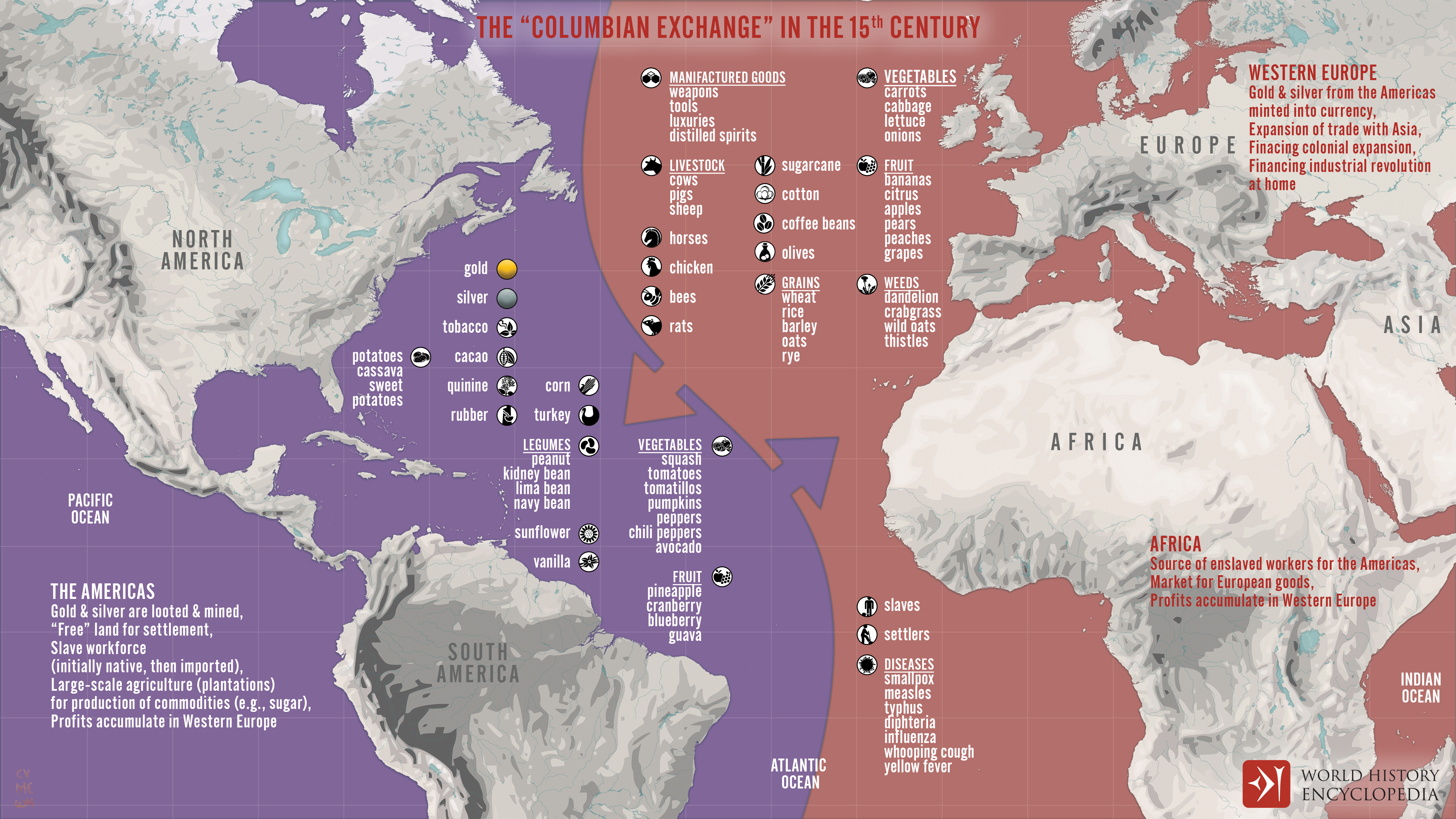
The transfer of food, animals, minerals, people, and diseases between Africa, Europe, and the Americas
Effects of the Columbian Exchange
The Columbian Exchange, which began with Christopher Columbus' voyages to the Americas in 1492, had profound and far-reaching effects on the world. Here are some of the key effects:
- Exchange of Goods: The Columbian Exchange facilitated the exchange of plants, animals, and diseases between the Old World (Europe, Africa, and Asia) and the New World (the Americas). This led to the introduction of crops such as maize, potatoes, tomatoes, and tobacco to Europe, while Europeans introduced crops such as wheat, rice, and sugarcane to the Americas.
- Cultural Exchange: The exchange of people, ideas, and technologies between the Old and New Worlds resulted in significant cultural diffusion. It influenced art, music, cuisine, language, and religious practices on both sides of the Atlantic.
- Population Shifts: The Columbian Exchange led to significant population shifts. The introduction of new crops such as maize and potatoes led to population growth in Europe, while the spread of diseases like smallpox, measles, and influenza devastated indigenous populations in the Americas.
- Economic Impact: The Columbian Exchange transformed the global economy. The influx of precious metals from the Americas, particularly silver and gold, fueled the growth of European economies and contributed to the change from Feudalism to Capitalism. The establishment of trade routes between Europe, Africa, and the Americas laid the foundation for global trade networks.
- Environmental Changes: The exchange of plants and animals had profound effects on the environment. In some cases, non-native species became invasive and disrupted ecosystems. For example, the introduction of horses transformed Native American cultures and altered landscapes in the Americas.
- Social and Political Consequences: The Columbian Exchange had significant social and political consequences. It contributed to the rise of colonialism as European powers established colonies in the Americas to exploit their resources. It also led to the transatlantic slave trade, as millions of Africans were forcibly brought to the Americas to work on plantations.
Overall, the Columbian Exchange reshaped the course of history, leading to both positive and negative consequences that continue to be felt to this day. It profoundly altered economies, cultures, and environments on a global scale.